
Lisette Sutherland’s
Personal User Manual
The purpose of a personal user manual is to help others understand us better so that we can collaborate more effectively. The idea behind this concept came from my highly sought-after Collaboration Superpowers TEAM Agreement.
Lastly, take a look at my personal user manual examples below for inspiration to create your own.

How to work with me
I like working with people who are clear, thoughtful, and kind. I care a lot about doing good work, but I care just as much about how we work together. I thrive in environments where expectations are clear, feedback flows both ways, and everyone feels like they belong.
I’ve worked across many industries, teams, and time zones – often in experimental or ambiguous situations – so I’m comfortable navigating the grey areas. That said, I don’t thrive in chaos or politics. I do best when priorities are shared and agreements are honoured. I bring a mix of structure and creativity to my work.
If you need someone who can connect dots, translate vision into action, and bring people along, then I’m probably a good fit!
Time zone & working hours
- I live in The Hague, The Netherlands.
- I generally work between 8:00 – 19:00 CET / CEST on weekdays; it’s flexible
Social media
LinkedIn is the only social media platform I actively use.
Languages
English (Native) | Dutch (C1 Professional) | German (A1 Basic)
How I work best
- Environment: I do my best work in quiet, low-stimulus environments with minimal distractions. I’m highly sensitive to noise and visual chaos, so I’ve created a workspace that supports deep focus and flexibility. I use a sit/stand desk, noise-cancelling headset, and work in natural light with regular movement breaks.
- Daily Rhythm: I start my days with a short walk and check-in with my calendar. I use time-boxing and scheduling tools to create structure. My ideal day includes a few hours of focused work, a midday break (often for a run), and then another block of deep work in the afternoon. I take breaks when I need them and value autonomy in managing my time.
- Working Style: I thrive with clear instructions, shared goals, and regular check-ins. I’m someone who loves independence and feedback: I don’t want to be micromanaged, but I do want to stay aligned. I’m energized by meaningful collaboration and doing work that has a real impact.
- Values in Action:
- Freedom: I love designing my schedule and working with flexibility and purpose.
- Order: I appreciate when teams have solid agreements and expectations in place.
- Relatedness: I like to care about the people I work with. It’s never just a “job.”
Communication Preferences
- Async first, but human-centered: I strongly prefer asynchronous written communication for most things. It gives me time to process and helps me keep track of details. I receive hundreds of messages a year, and email or written chat (Slack, etc.) helps me stay organised and accountable.
- Feedback: I prefer giving feedback in writing with the option to follow up in conversation. I respond well to positive reinforcement. Public praise and frequent encouragement motivate me (I’m like a puppy that way!).
- Meetings: I generally avoid meetings unless there’s a clear purpose. I much prefer video calls to voice-only calls (I like seeing who I’m speaking with), but I understand that not everyone feels the same way; I can flex when needed.
- Tools: I’m versed in almost every communication tool out there (I’m a tool junkie). That said, I don’t enjoy using Microsoft Teams (but of course, I will when required).
How my brain works
This is a snapshot of how I process the world: what energises me, what I struggle with, and what makes me a uniquely valuable team member.
Cognitive traits
- I’m extremely creative, with a deep need for intellectual stimulation. I often connect ideas that others don’t see.
- I’m a pattern recogniser, a systems thinker, and someone who prefers depth over speed.
- I have a strong sense of justice and care deeply about fairness and integrity in my work.
Interpersonal style
- I’m the glue that holds teams together. I notice when people are left out, and I make sure everyone is seen.
- I value personal connections, but I don’t need a lot of social interaction outside of work to feel close to people.
- I get invested in shared agreements; when others don’t follow through, it’s frustrating for me.
Processing & preferences
- I’m sensitive to moods and environmental stimuli: background noise, disorganisation, or bad vibes affect me more than most.
- I don’t like sitting still for long and need to move regularly.
- I take time to think things through. I’m not the fastest responder, but my contributions are thoughtful and often connect disparate dots.
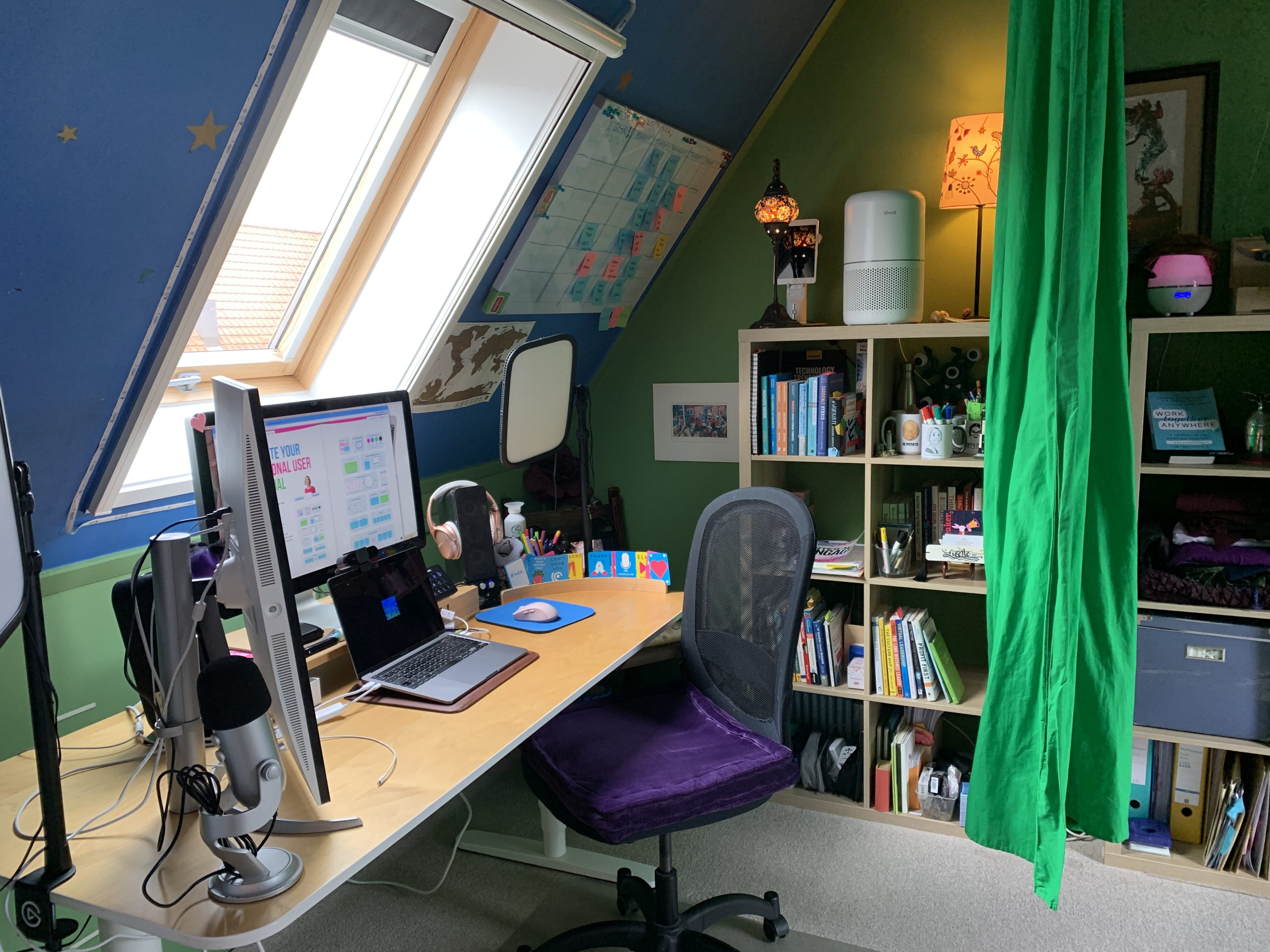
My workspace
I work from a dedicated attic office in my home in the Netherlands. It’s quiet, private, and tailored to how I think and move. I prefer chairs without armrests (so I can sit cross-legged) and a sit-stand desk to stay physically engaged during the day.
My current setup includes:
- 13″ Macbook Pro
- Two 27-inch Thunderbolt displays
- Elgato Key Lights, Light Strip, and Stream Deck
- Logitech Brio webcam
- Bose QC35 headset
- A green screen curtain
- Blue Yeti microphone (for podcast interviews)
- Levoit air purifier (I have terrible allergies every Spring)
- Take a virtual tour of my office.
INTERESTED IN CREATING YOUR OWN PERSONAL USER MANUAL?

Express your personality & quirks in a professional setting with my how-to guide to create your personal user manual.
Team dynamics & stress signals
What helps me feel connected on a team
- I feel most engaged when I know I’m contributing to something meaningful with others.
- Personal connection matters. I like to get to know the people I’m working with, even if it’s just on a light and professional level.
- I need to feel liked and valued to feel connected. Without that sense of mutual appreciation, I tend to retreat.
What people might misunderstand about me
- I can appear extroverted, but I’m actually more solitary by nature. I love people and parties, but I also need large stretches of alone time to recharge.
- Because I value clarity and structure, I may seem rigid, but I’m actually highly adaptable once expectations are clear.
- My silences aren’t disinterest; they’re usually processing time or signals that I’m overloaded.
Signs I’m stressed
- I get short with my words, which can come off as blunt or even mean. This isn’t how I want to show up, and I work to catch it early.
- I withdraw and become quiet, which is often when I most need support (though I struggle to ask for it).
- I get defensive when I receive unexpected or poorly delivered criticism. I want to improve, but it can hit me hard. Clear, kind feedback helps me grow without shutting me down.
How I take responsibility for these dynamics
- I manage overstimulation by designing my workspace intentionally and using tools like noise-cancelling headphones and checklists.
- I invest in routines (like running, sleep, and strength training) that help me regulate my energy and emotions.
Outside of work
Creative outlets
- Sewing – Since the pandemic, I’ve started sewing. I needed to do something that didn’t involve a screen; I’ve fallen in love with the craft.
- Music – I’ve seen hundreds of live shows, worked as a promoter/tour manager, and still listen to ‘80s goth and synthpop (Depeche Mode & Erasure are all-time faves).
- Board games – My husband’s most recent obsession is board games – and I love it. Our all-time favorite is Innovation.
Movement & health
- Running – I’m a regular running. It’s where I do my best thinking.
- Virtual strength training – I found CoPilot, an app that pairs you with a personal trainer. My trainer, Brandon, assigns weekly workouts based on my goals – and then monitors my progress via my Apple watch.
- Being outside – My husband and I are avid campers. As soon as the temperatures go up, you will find us outdoors with friends: biking, hiking, running, climbing, mountaineering, and swimming.
Lifelong learning
- I’m always listening to podcasts.
- US politics – I only talk politics if you ask me to. I wish more leaders & politicians had ethical principles.
Personal joys
- Cats – I love cats. I used to have 3 of my own. Now I unofficially care for 8 neighborhood cats. It’s perfect: part-time crazy cat lady, full-time fulfilled.
Other examples of personal user manuals
Grouped by tool:
- Create your own Personal User Manual (Miro)
- Daniel Thomason – personal user manual (GitHub)
- René van Osnabrugge – my user manual (GitHub)
- Sid Sijbrandij – Guide to the CEO (GitLab)
- Matt MacInnis – little user manual (Google doc)
- Tahira Shameem – Working with Tahira (Google doc)
- Madison Taskett – User Manual (Google slides)
- Steph Smith – personal user manual (Google slides)
- Abby Falik – Leaders need “User Manuals” (LinkedIn)
- Pete Vowles – Working with me – a ‘User Manual’ (Medium)
- Steven Sampson-Jones – Manual of Steve (Medium, infographic-style)
- Andrea “Dea” Woodard – Personal User Manual (Notion)
- Lily Konings – How to work with Lily (Notion)
- Thomas Funke – User Manual (Notion)
- Andy Carolan – My User Manual (Website)
- Management 3.0 – Personal Maps (Website)